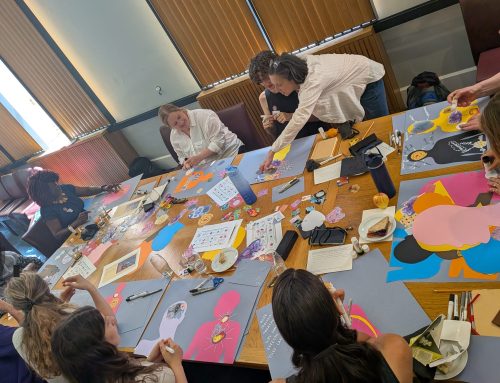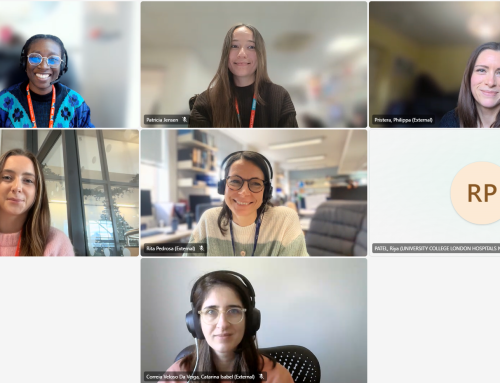
From 17th to 21st August, CRUK City of London Radiation Research Centre (RadNet CoL) took part in a week-long work experience placement for In2STEM students, providing a unique opportunity to explore cancer research and imaging at King’s College London.
In2STEM is a widening participation programme that supports young people from under-represented backgrounds studying science, technology, engineering and mathematics (STEM) subjects at BTEC and A-Level. Through hands-on activities and interactions with researchers, the programme helps students gain insight into STEM careers and the many pathways available into research and healthcare innovation.
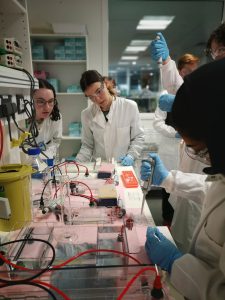
Students in workshop organised by Graeme Hewitt’s Lab (Isobel Bonning, Zoe Newson, Emelie Jansson, and Ekaterina Morozova)
At Guy’s Cancer Centre, the students spent a morning with researchers Isobel Bonning, Zoe Newson, Emelie Jansson, and Ekaterina Morozova in Dr Graeme Hewitt’s lab, where they gained practical insight into some of the laboratory techniques used in cancer research, including agarose gel electrophoresis and microscopy. They also learned about each researcher’s career paths, university experiences, and current research projects.
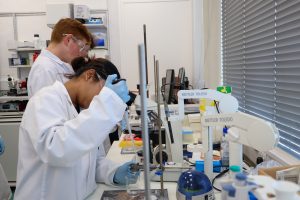
Students in workshop organised by Dr Cinzia Imberti and PhD student Zuzanna Kokoszka
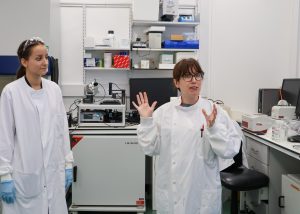
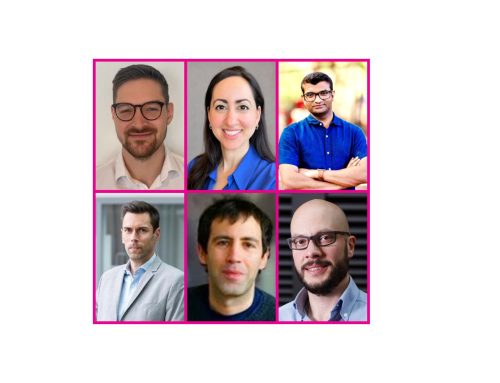
Dr Cinzia Imberti (right) and PhD student Zuzanna Kokoszka (left)
The students took part in a bespoke laboratory session designed and delivered by Dr Cinzia Imberti and PhD student Zuzanna Kokoszka in the School of Biomedical Engineering and Imaging Sciences at St Thomas’ Hospital. The interactive workshop introduced students to PET imaging and demonstrated how imaging agents are developed and purified before being used in disease detection and treatment.
The placement provided students with an opportunity to engage with cutting-edge cancer research first-hand while meeting researchers at different stages of their careers. The students gained valuable insights into the skills, training and opportunities available within cancer research and the wider STEM sector.
Reflecting on the week, one student said the placement “provided more insight into a career I knew not a lot about and allowed me to question what the right path is for the future.” Another commented that the sessions “were really interesting and relate a lot to what I want to do in the future. Everything was just really fun overall.” When surveyed, all of the students agreed that the week slightly or significantly increased their interest in studying or working in STEM, and either agreed or strongly agreed that they felt more confident that they could find a route into a job that suited them.
Programmes such as In2STEM play an important role in broadening access to STEM careers by helping young people build confidence, develop new skills and connect with professionals working at the forefront of research and innovation.
We would like to thank all the researchers, clinicians, technical staff and professional services colleagues who contributed their time and expertise to make this In2STEM placement such a success.