
Meet our Students
2025 Cohort
Isobel Bonning
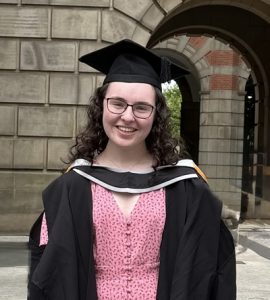 CRUK Funded Student
Project: Investigating the role of POLE3 in resistance to ionising radiation
Primary Supervisor: Roberto Bellelli, QMUL
Co-supervisor: Graeme Hewitt, KCL
Isobel’s research focuses on investigating POLE3, an accessory subunit of DNA Polymerase Epsilon, as a novel radiosensitisation target. POLE3 is a histone-fold protein involved in DNA replication and chromatin accessibility, which is facilitated through its binding partners, POLE4 and CHRAC1. Recently, a loss of POLE3 has been shown to increase sensitivity to ionising radiation, indicating a role of POLE3 in radiation resistance. Her project aims to elucidate the molecular mechanisms underlying this to open new avenues for POLE3 to be used as a novel target for radiosensitisation therapies.
Callum Emin
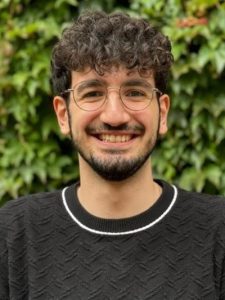 CRUK Funded Student
Project: Combination of anti-GD2 Molecular Radiotherapy and γδ-T cells for the Enhanced Treatment of Childhood Bone Cancers
Primary supervisor: Jane Sosabowski, QMUL
Co-supervisor Jonathan Fisher, UCL
Callum’s research focuses on combining low-dose radiotherapy and immunotherapy to develop a new treatment option for those with Ewing sarcoma and osteosarcoma. Radiation will be delivered to the cancer cells by attaching it to antibodies targeting the upregulated lipid Ganglioside GD2. At the tumour site the low-dose radiation will damage and stress the cancer cells, thus sensitising them to immune-mediated killing. Injected allogeneic γδ-T cells are activated after detecting the increased stress of the cancer cells and their bound radioactive antibodies. Once activated γδ-T cells will kill the cancer cells and activate bystander immune cells to assist in tumour clearance.
Patricia Jensen
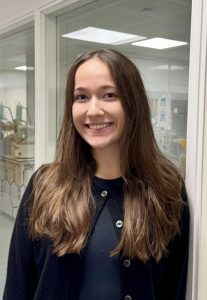 Guys Cancer Charity Student
Project: SMART: Small Molecule Activatable RadioTherapeutics
Primary supervisor: Adam Sedgwick, KCL
Co-Supervisor: Sam Terry, KCL
Patricia’s PhD research focuses on enhancing the safety and efficacy of established cancer treatments. They are developing strategies that use the high-energy radiation from radiotherapy to locally activate non-toxic prodrugs, converting them into potent anticancer agents only at the tumour site. This approach aims to reduce the systemic toxicity, overcoming side effects commonly associated with chemoradiotherapy while maximising the therapeutic benefit of existing radiotherapy regimens.
Maria Junjua
 UCL Funded Student
Project: Optimisation of Cryopreservation and Ultrasonic Rewarming of Liver and Tumour Tissue
Primary Supervisor: Maria Hawkins, UCL
Co-supervisor: Elly Martin, UCL
Maria’s research focuses on optimising cryopreservation and ultrasonic rewarming of liver tissue and liver tumours to enable tissue revival after thawing. Using mouse liver samples, She will investigate how rewarming parameters affect post-thaw viability and metabolism in precision-cut liver slices. The aim is to develop a robust cryopreservation and rewarming pipeline for larger tissue volumes, supporting the creation of a tissue biobank. This work has potential applications in transplantation, regenerative medicine, and improved preservation of healthy and cancerous tissues.
Stephanie Leadbitter
 UCL Funded Student
Project: Boron-Conjugated Antibodies for Boron Neutron Capture Therapy (BNCT) in the Treatment of Liver Metastases
Primary Supervisor: Gary Royle, UCL
Co-supervisor: Tariq Enver
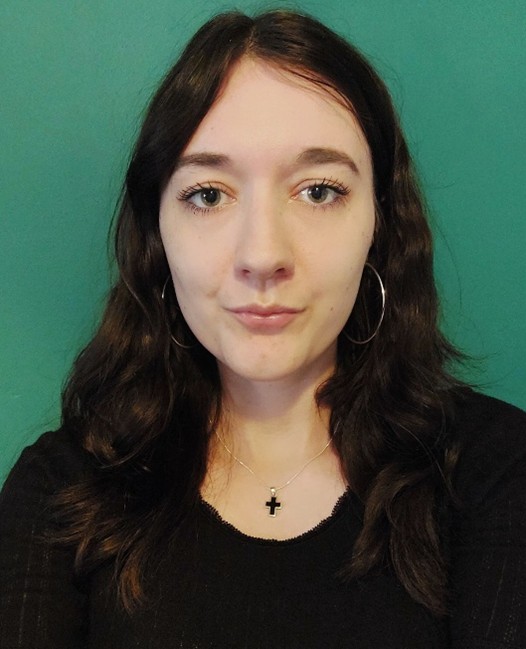
Steph is a PhD candidate at the Cancer Institute and the Medical Physics and Bioengineering Department in University College London, supervised by Prof. Gary Royle and Prof. Tariq Enver. Her research investigates boron-conjugated antibodies for Boron Neutron Capture Therapy (BNCT) in treating liver metastasis, focusing on the mechanisms of tumour cell death and the efficacy of combined BNCT & anti-macrophage therapy. She holds a BSc in Biomedical Science and an MSc in Cancer Biology and Radiotherapy Physics from the University of Manchester, with prior academic research focusing on proton-beam SFRT and over three years’ experience in pharmaceutical development and radiopharmacy.
Suzanne McGowen
 Guys Cancer Charity Funded Student
Project: Does the tissue micro-environment contribute to radiotherapy resistance in breast cancer?
Primary Supervisors: Elinor Sawyer, KCL
Co-Supervisor: Anita Grigoriadis, KCL
Suzanne ‘s research aims to understand why some breast cancers recur despite postoperative radiotherapy following breast-conserving surgery. By studying both ductal carcinoma in situ (DCIS) and invasive breast cancer, she seeks to identify biological mechanisms that drive resistance to radiotherapy. Using genomic and spatial profiling techniques to assess the tumour, immune, and stromal compartments, her research focuses on how interactions within the tumour microenvironment potentially contribute to radiotherapy resistance. Understanding these mechanisms may enable better prediction of who benefits from radiotherapy and supports the development of personalised treatment strategies, including treatment intensification or novel combination therapies.
Philippa Samella
 CRUK Funded Student
Project: Investigate the role of neutrophil in radioresistance in breast cancers
Primary supervisor: Anthony Kong, KCL
Co-supervisor: Ilaria Malanchi, Crick
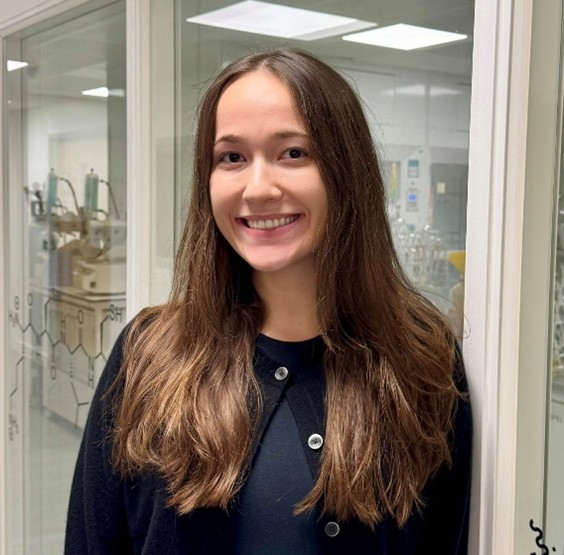
Despite prior local radiotherapy and systemic therapies, many breast cancer patients still develop metastatic disease. Philippa’s project examines how neutrophils recruited to irradiated tumour sites alter cancer radiosensitivity. Neutrophils are highly plastic cells whose education varies with tissue context and is further shaped by perturbations such as ionising radiation. Because neutrophils participate in tumour responses to therapy, we hypothesise that radiation-educated neutrophils modify tumour responses to radiotherapy. Such neutrophils promote metastatic niches in the lung and contribute to radiation-induced lung fibrosis. Dysregulated neutrophil activation may drive tumour radioresistance and increase the overall risk of breast cancer recurrence overall.
Devika Singh
 CRUK Funded Student
Project: Accelerating progress for brain lymphoma: how can ‘immune-activating’ radiotherapy improve CAR-T outcomes?
Primary supervisor: Claire Roddie, UCL
Co-supervisor Erik Sahai, Crick
Devika’s project focuses on improving CAR-T cell therapy for primary central nervous system (CNS) lymphoma by using radiotherapy to prime the tumour immune microenvironment. The aim is to develop an in vivo model of CNS lymphoma that accurately recapitulates the unique CNS TME, enabling investigation of how radiotherapy-mediated immune modulation can enhance CAR-T cell infiltration, persistence, and anti-tumour efficacy in CNS lymphoma.